

 X
X

 Facebook

 Linkedin

 Email
Email
 Copy Link
“In God we trust; everyone else has to supply us with data and records.”
Comprehensive, detailed records are essential for food safety and for showing that your safety program is carefully managed. But it also helps protect your company from a potentially damaging audit.
“You need the records to prove that the system is functioning. But it’s not just data, records show that you have documented procedures. Auditors look at the documented procedures to see if people are following them and filling in the records,” consulting food scientist Richard Stier, M.S. said.
Stier’s comments came during a Food Safety Magazine webinar held on April 16th. Titled “Recordkeeping and Document Management for Food Safety Compliance,” the webinar featured Stier and Claudia Coles, President, Seafood Products Association, who explained the fundamentals of recordkeeping and document control for food safety plans. They also gave viewers an inside look at what inspectors are checking for in your recordkeeping program and why proper documentation isn’t just needed to pass audits, it’s about liability protection.
Do You Have a Document Control Officer?
Developing strong food safety systems requires the careful organization of a large amount of documents covering what are often very complex procedures. Wherever possible, document control should not be considered yet another task to hand off to employees. Instead, Stier said companies should have a dedicated Document Control Officer (DCO).
“I’m a firm believer in companies adopting a policy where they have a document control officer. You need a standard procedure and protocol for developing your procedures. You need a format for reviewing, modifying, and approving protocols. And once you have this in place, they’ve got to be implemented, Stier said.
Stier said that all of these processes require training and the removal of outdated documents. Stier said that he doesn’t believe that the DCO needs to be part of the quality control team - it can be anyone from the company who is organized and has the ability to work with people.
Once they’re trained, Stier said the DCO should be in charge of managing:
- New procedures development
- Revisions
- Procedure Review
- Worker training and education
- Ensuring that new protocols and updates are properly distributed
- Document recovery and destruction of out-of-date procedures
The final point is especially interesting, Stier said. He described how, when performing audits, he discovers people using old and outdated product rules.
“Why didn’t they have a document control officer to make sure this didn't happen?” Stier asked. He also described the use of outdated documents as “a breakdown of the system.”
Once the DCO is established, the company needs to develop a unique, standard format for documents and procedures for tracking changes to these documents.
He also described the four “magic words” when it comes to developing procedures: develop, document, implement, and maintain.
“You Need a Systematic Approach”
Missing a food safety risk during hazard analysis is not only dangerous - it’s something auditors look for when assessing documentation compliance, Claudia Coles of the Seafood Products Association said during the webinar.
“This is one of the key areas that a lot of audits and inspections are finding is that firms are not doing very thorough hazard analysis.”
She added that inspectors often find that records of monitoring and corrective actions are also lacking.
“You may have people who monitor one activity, but they’re missing another area. That’s why you must have a whole systematic approach in your system.”
She also mentioned a long list of common recordkeeping failures found in audits, including:
- Hazard analysis misses a hazard that requires a control
- Lack of monitoring & corrective action records
- Incomplete or missing records of the Food Safety/HACCP Plan
- Verification calibration records lack details or are missing
- Failure to implement HACCP monitoring, verification & recordkeeping
- Failure to implement preventive control procedures
- Insufficient monitoring of sanitation conditions and practices
“The proof is in the pudding. If you don't have your documentation to show that it actually happened, then you don't actually know,” Coles said.
Coles also highlighted the need for extensive recordkeeping that takes place in real time, “not two hours later or two days later when they’re trying to remember what the observed value was.”
She also noted that even if it isn’t always required by every regulation, implementing strong environmental monitoring can go a long way in proving the effectiveness of sanitation measures and helping prevent contamination.
Rootwurks: Documentation for SQF and Your Peace of Mind
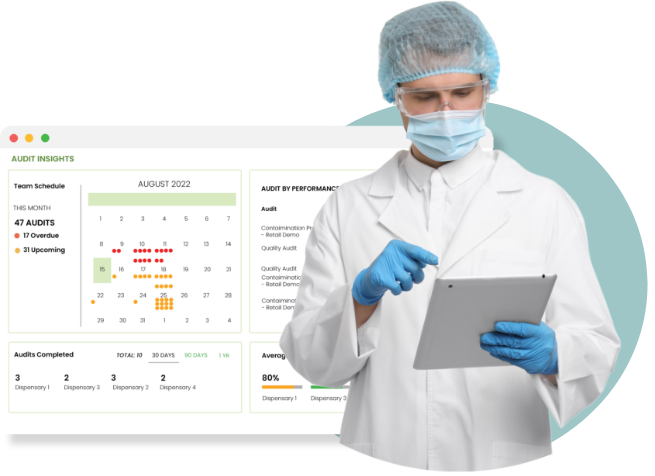
One of the key features of the Rootwurks platform is end-to-end recordkeeping to document food safety and compliance procedures, and to track employee progress and comprehension on safety training.
In addition, considering that one of the key updates in the SQF 10 guidelines is the need for a well-documented food safety culture assessment plan with measurable benchmarks, the need for proper recordkeeping is more important than ever.
To learn more about the Rootwurks platform’s built-in features for food safety training and how they help companies master recordkeeping, take a look at our platform here.
And if you missed the Food Safety Magazine webinar “Recordkeeping and Document Management for Food Safety Compliance, you can still catch it on demand here.