

 X
X

 Facebook

 Linkedin

 Email
Email
 Copy Link
A new Botulism-related food safety recall announced by the FDA last week highlights the importance of preventive measures, and why food safety guidelines are much more than a regulatory hassle - they can be necessary to the survival of a brand.
The latest alert involves “Good Brain Tonic”, a health supplement produced by Liquid Blenz Corp that is sold online and in retail stores nationwide.
In an announcement on April 14th, the FDA stated that the potential for Botulism contamination “was discovered through analysis by the Cornell Food Venture Center and field testing by New York State Department of Agriculture and Markets Food Inspectors.” No illnesses have been reported, but the FDA has urged consumers who purchased the products to return them to their place of purchase.
The recall was reported just a few months after the FDA announced that a total of 48 infants in 17 states had suspected or confirmed infant botulism and confirmed exposure after an outbreak involving contaminated organic whole milk powder produced by ByHeart Whole Nutrition Formula.
According to records released by the FDA, a facility used to make ByHeart Whole Nutrition had persistent sanitary problems that were discovered during site inspections.
As the FDA stated in this week’s announcement, Botulism is one of the most dangerous foodborne pathogens. It is potentially fatal and can cause general weakness, dizziness, double-vision, trouble speaking or swallowing, and difficulty in breathing, among other symptoms.
But even if no consumers fall ill, such recalls and the media coverage that ensues can deal devastating damage to a company’s bottom line and reputation. They also indicate why it's so important that companies deploy the training necessary to build robust food safety plans and adopt a proactive, preventive approach to food safety.
Controlling the Process, Mitigating Risk
Preventing a Botulism outbreak isn’t just a matter of keeping your facility clean. It requires implementing robust process preventive controls in the manufacturing process to mitigate risk.
Clostridium botulinum, which causes Botulism, is anaerobic, meaning it lives and grows in low oxygen conditions. In shelf-stable or low-acid drinks, anaerobic pathogens can survive if proper care isn’t taken to control the pH of the fluids and the thermal process used to make them.
According to the USDA’s Food Safety Inspection Service (FSIS), “The control of foodborne botulism is based almost entirely on thermal destruction (heating) of the spores or inhibiting spore germination into bacteria and allowing cells to grow and produce toxins in foods.”
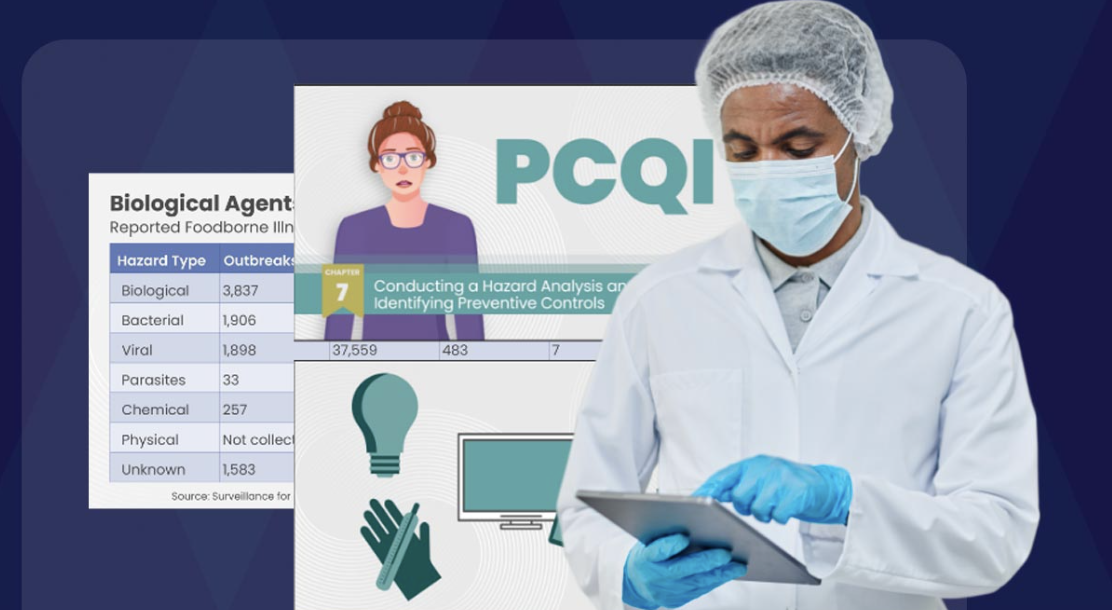
In Preventive Controls Qualified Individual (PCQI) training, learners study the "process preventive controls” used to ensure that the risk factors for foodborne pathogens like Clostridium botulinum have been taken care of.
These process preventive controls include critical limits, monitoring and corrective actions, verification and recordkeeping, food allergens, and sanitation, among others.
Needed: Stronger Food Safety Plans
Under the guidelines of the FDA’s Food Safety Modernization Act (FSMA) final rule for Preventive Controls for Human Food (PCHF), food facilities must have a food safety plan in place that includes an analysis of hazards and risk-based preventive controls to minimize or prevent the identified hazards.
The person responsible for the development of the food safety plan must have PCQI training.
The food safety plan must include hazard analysis, preventive controls, process controls, food allergen controls, sanitation controls, and oversight and management of preventive controls.
"A food safety plan is the foundation of your entire operation, but it shouldn't be a 'dead document' that sits in a binder on a shelf. For a plan to be effective, it must be a living document—one that is constantly reassessed, supported by management, and understood by every person on the plant floor,” Jeff Chilton, Food Safety Consultant at Rootwurks & Founder of Peak Advisors, said in a recent Rootwurks interview.
In addition, under the updated guidelines in SQF 10, companies must produce a robust and well-documented food safety culture assessment plan.
Chilton said that when assessing food safety culture, it involves looking for signs that a company is upholding guidelines in its safety culture - even if no one is watching. In other words, safety guidelines aren’t seen as a hassle; they are a core, measurable component of the company’s culture, and are followed with real vigilance in order to prevent contamination outbreaks and product recalls.
But in order to develop a strong food safety culture, companies need full buy-in from leadership, sophisticated tools for recordkeeping and training, and customizable training that reflects the real-world conditions and safety threats that employees face on the workfloor. The training must be reinforced on a regular basis with real accountability for employees and leadership.
PCQI Training: Essential Methods for Risk Mitigation
PCQI training goes far beyond the regulatory guidelines of the FDA. It helps provide food industry professionals with the "how" and "why" behind the safety guidelines that are essential for preventing potentially devastating food safety incidents like the Botulism-related food recalls in recent months.
This is why we developed the Rootwurks PCQI training course, to teach learners how to build ironclad safety systems based on preventive controls that can identify and mitigate hazards and eliminate threats to the production line and company reputation.
Enroll today and help your company improve its safety culture, build stronger, more resilient food safety plans, and elevate compliance adherence.
-2.jpeg?width=1080&height=683&name=1%20(2)-2.jpeg)