

 X
X

 Facebook

 Linkedin

 Email
Email
 Copy Link
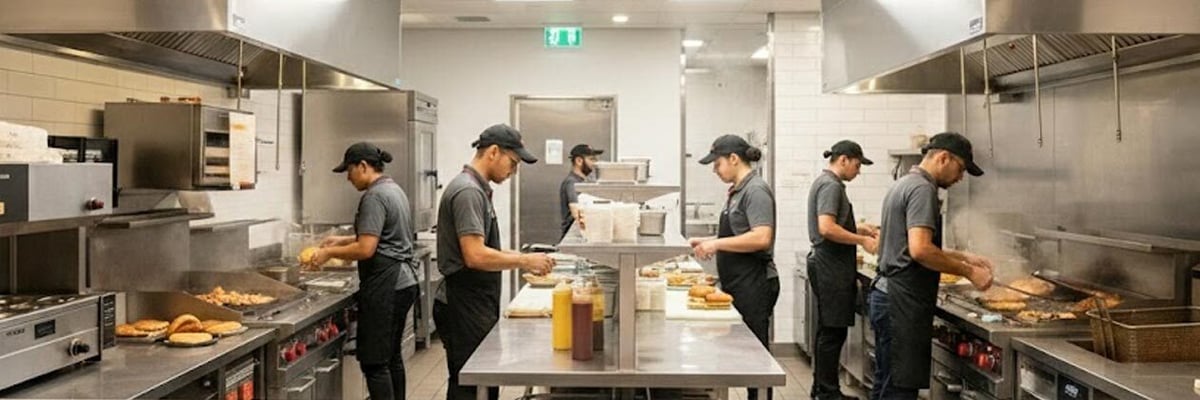
Quick service restaurants are high-paced, high-risk workplaces where every second counts - and the margins are far too slim for safety to be just a “check the box” nuisance.
According to the National Restaurant Association, inflation has seen food and labor costs rise by 35% for restaurant owners in recent years, while customer traffic at eateries remains below pre-Pandemic levels. This has left countless restaurants struggling to keep 3-5% profit margins.
In a hectic environment with little room for error, safety training is often seen as a hassle that gets in the way of work. But effective safety training is also essential for building a strong safety culture. And in an industry of shrinking margins, a robust safety culture helps boost efficiency, improve consistency across locations, and prevent the type of costly food safety and workplace safety incidents that can torpedo your company's reputation and your bottom line.
Why Safety Culture Matters
1: Your Safety Culture Saves Money
In a QSR restaurant, employees are often juggling several tasks at the same time. And once you throw in hot surfaces, sharp utensils, and slippery floors, the recipe is just right for dangerous workplace accidents.
.jpg?width=246&height=246&name=large-1%20(8).jpg) According to figures from the National Council on Compensation Insurance (NCCI), the average cost of a workers' compensation claim from a slip or fall can surpass $54,000, while claims for burns average more than $64,000.
According to figures from the National Council on Compensation Insurance (NCCI), the average cost of a workers' compensation claim from a slip or fall can surpass $54,000, while claims for burns average more than $64,000.
These figures don't include work stoppages, which can severely hinder a restaurant's ability to maintain its typical workflow.
When a restaurant has a strong safety culture in place, following safety protocols is second nature for the staff. The staff has a safety-first mindset that mitigates risk and isolates and eliminates safety risks throughout the workday. In addition, the American Society of Safety Engineers has stated that for every $1 invested in an effective workplace safety program, companies may save between $4 to $6. These dividends from safety training can come in the form of lower insurance premiums, more productive workdays, less absenteeism, and a reduced need to implement corrective actions, just to name a few.
In addition, cleaning and sanitation safety protocols can serve as preventive maintenance, helping equipment last longer as it is regularly cleaned and examined for any safety or contamination risks.
-
Safety Culture Streamlines Operations
A strong safety culture means that safety protocols are second nature and are universally known to team members. It’s about whether or not people are doing what they’re supposed to do, even when supervisors aren’t watching.
Having a staff of knowledgeable, empowered employees reduces friction by limiting the number of times a team member has to stop and ask for guidance. With every employee empowered to lead on safety, they can all act independently to handle safety concerns, helping expedite operations and keep things running smoothly.
With cleanliness maintained as part of the daily culture, work surfaces will be set up for.jpg?width=291&height=291&name=large-2%20(7).jpg) streamlined operations, and walking surfaces will be dry and clear of obstructions, preventing injuries and allowing team members to work with speed and directness.
streamlined operations, and walking surfaces will be dry and clear of obstructions, preventing injuries and allowing team members to work with speed and directness.
In addition, a strong safety culture means that staff members should be ready and able to step in for one another seamlessly, as they will all know the Standard Operating Procedures (SOPs) for each station.
The safety culture should also be backed up by solid digital recordkeeping in order to understand better where slowdowns take place and where more focus is needed.
-
Safety Culture Helps Reduce Turnover
Heavy turnover is a fact of life at QSRs, with turnover rates often exceeding 130 percent. This is well above the average for the US workforce - and it doesn’t come without a price.
Replacing an hourly restaurant employee, when factoring in training, time lost, and recruitment, can easily cost $2,300 or more. But this number has almost certainly surged in recent months, reaching more than $5,000 for many businesses. This is partly due to medical inflation and the increased cost of providing benefits for new hires.
.jpg?width=256&height=256&name=large-3%20(1).jpg) In addition, employers may incur costs for terminating benefits for past employees, while their remaining team members face a more stressful workload and the health consequences that can result.
In addition, employers may incur costs for terminating benefits for past employees, while their remaining team members face a more stressful workload and the health consequences that can result.
Retaining experienced, trained staff is the most effective way to reduce the high costs of turnover, but it requires a consistent effort and a strong safety culture. By investing in custom, eye-level, and engaging training, restaurants send a clear message to their employees that they take training seriously and are investing in the future and professional development of their staff.
Across the board, employee engagement bears benefits for restaurants.
A meta-analysis research study performed by Gallup in 2023 examined the workplace impact of having more employees who are mentally and emotionally invested in the company and committed to its growth.
The research found that employees who are actively engaged are less likely to be actively looking.jpg?width=287&height=287&name=large-4%20(1).jpg) or open to a new job opportunity. The research found that low-engagement teams typically endure turnover rates that are 18% to 43% higher than highly engaged teams. In addition, the Gallup research found that companies with high engagement have 64% less safety incidents, and the work stoppages and loss of revenue that ensue.
or open to a new job opportunity. The research found that low-engagement teams typically endure turnover rates that are 18% to 43% higher than highly engaged teams. In addition, the Gallup research found that companies with high engagement have 64% less safety incidents, and the work stoppages and loss of revenue that ensue.
Simply put, employees are more likely to stay where they feel safe and empowered, and where they know their contributions are valued.
Rootwurks: Build a Safety Culture for the Lunch Rush
Mobile-optimized, user-friendly, and engaging, the Rootwurks LMS was designed to bridge the gap between “learning” and “doing” and help restaurants build a safety culture no matter how busy the lunch rush gets.
With Rootwurks, you won’t need to pull veteran team members off the floor to shadow a new hire, or make do with paper training manuals crammed in greasy binders in the break room. Instead, you can deploy hi-tech digital training solutions like our ‘launch and learn’ QR codes for instruction right where employees need it on the restaurant floor. These tools help build a culture in which safety protocols and quality assurance are second nature, reducing the stress and burnout that drive turnover.
But that’s just scratching the surface of how we help restaurants preserve safety and their slim but crucial profit margins.
To learn more, reach out to the Rootwurks team, and we’ll schedule a custom tour of our LMS: