U.S. authorities have urged the food industry to fortify cybersecurity defenses following a series of recent attacks on supermarket chains across Europe.
“The authoring organizations urge owners and operators to defend against this activity by using strong authentication, keeping systems updated, identifying any systems that are accessible from the internet, removing unnecessary remote access, and securing any necessary remote access,” the Cybersecurity & Infrastructure Security Agency said in a press release last week.
The press release, which cited "authorizing organizations" including the FBI, Health and Human Services, US Department of Agriculture, and the Department of Transportation, stated that to mitigate the risk of cyberattacks, owners and operators must carry out several key defense measures:
- Eliminate public internet exposure for control systems
- Isolate operational technology devices
- Enforce credential security (change and strengthen passwords and implement multifactor authentication)
- Apply patches to firmware
- Restrict access to devices
- Develop reliable offline and online backups
- Monitor and report any unexpected activity
- Review setpoint ranges for devices
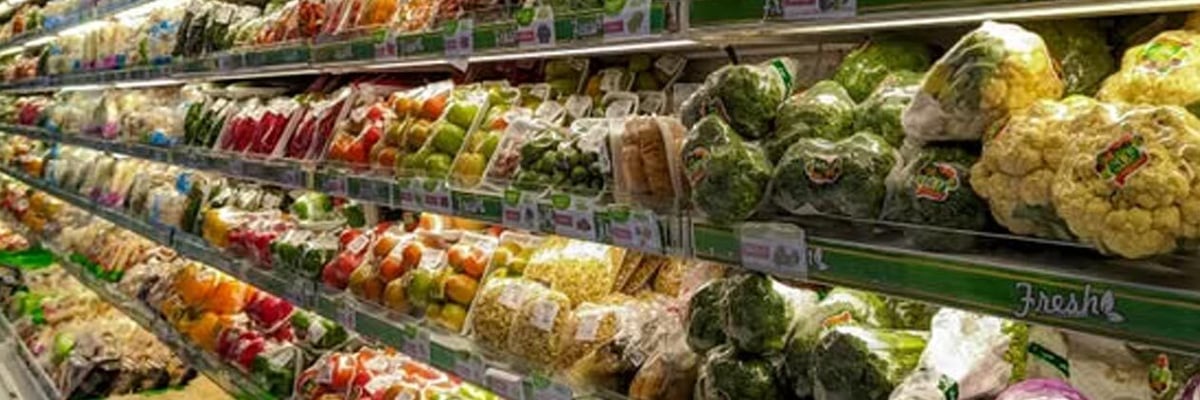
Earlier this month, cyber attackers hit supermarket chains across Europe, causing refrigerators to malfunction across the continent. The attacks resulted in tons of spoiled food and millions of Euros in damages.
According to The Associated Press, hackers seized control of fridges and freezers in one Swedish supermarket and set them to 122 degrees Fahrenheit. Less than a month earlier, a similar wave of attacks hit hundreds of supermarkets in France, the Netherlands, and Belgium, including 700 supermarkets in France alone.
The hackers reportedly exploited vulnerabilities in refrigeration software and raised temperatures at will. Also in October, Reuters reported that the Pentagon is investigating a series of refrigerator malfunctions at military base commissaries in August that were suspected to be the result of cyberattacks.
Reuters reported that at least six bases were affected.
Cybersecurity: A Rising Food Safety Threat
An October 2025 review published in the Journal of Agriculture and Food Research said that the increased use of technology such as sensors and AI has "amplified susceptibility to cybersecurity threats and potential cyberattacks."
The report analyzed 30 cybersecurity incidents between July 2011 and April 2023 and said that the diversity of attacks - from ransomware attacks to unauthorized access through compromised credentials - "underscores the need for multifaceted security strategies to address a wide spectrum of cyber threats.”
The most common incidents were ransomware attacks, accounting for 17 out of 30 cases.
The report found that direct costs to the companies hit in the 30 incidents ranged from a few million to $202 million. It states that if these threats are not addressed, attacks will cause higher prices along the entire supply chain, affecting consumers, producers, processors, wholesalers, and retailers, comparable to the effect of adverse weather events.
According to the authors, the impact of cyberattacks goes far beyond just immediate costs such as operations, continuity, and income flows. The indirect costs range from “lost productivity, future revenues, and shying away from future opportunities due to high risk.”
The report also highlighted the FDA’s adoption in 2011 of the Food Safety Modernization Act in 2011, which calls for comprehensive measures to guarantee the integrity and safety of the food supply.
In October, French authorities who investigated the attacks said that connected systems were a key factor and that “exposing a management interface on the Internet is contrary to best practices.”
Harden Your Systems
In a webinar held by The Food Institute in June, Richard Cervilis — Director, Security, Privacy, and Risk Consulting at RSM US LLP cited the risk posed by connected refrigeration and other operational tech.
"From plants and floors and facilities, all this is now online and connected—refrigeration, control systems, network sharing across the board…and oftentimes we're seeing that equipment is too old to patch. So, those attackers are really looking for that one door to get in."
He also highlighted how the perishable nature of food makes attacks potentially devastating, and gives attackers leverage to demand payouts.
"Staff [at food companies] from an IT perspective are lean and they are facing Fortune 500-grade attackers. They have that built-in pressure to pay a ransom because they just can't sit in the dark for a week. Those stakes are running past data and into food safety, potentially recalls, bad products, and eroding consumer trust."
He added that the problem is far more than an IT issue, it’s a matter of business continuity and the connected nature of supply chains means that when there are compromised pieces in the chain the attack “just ripples and cascades.”
Panelist Nicholas Catola, Senior Vice President & Northeast Cyber Practice Leader, PROEX at HUB International Northeast cautioned companies not to become used to the risk.
"Nearly every organization that we work with has experienced some form of business email compromise, social engineering, extortion, or ransomware. We've kind of maybe become desensitized to it, but the threat landscape is evolving really quickly."
He also cited the importance of response and recovery time, and that “"For food and beverage, it's: what are your recovery times? How are you able to segregate your backups, and how quickly are you able to get back online after a cyber event? Because that's going to indicate potentially how much business interruption loss an insurer may pay."
Learn the everyday best practices that help keep company systems safe from cybersecurity threats, enroll in the free Rootwurks cybersecurity course, available here on the Rootwurks online store.



 X

 Facebook

 Linkedin

 Email
 Copy Link